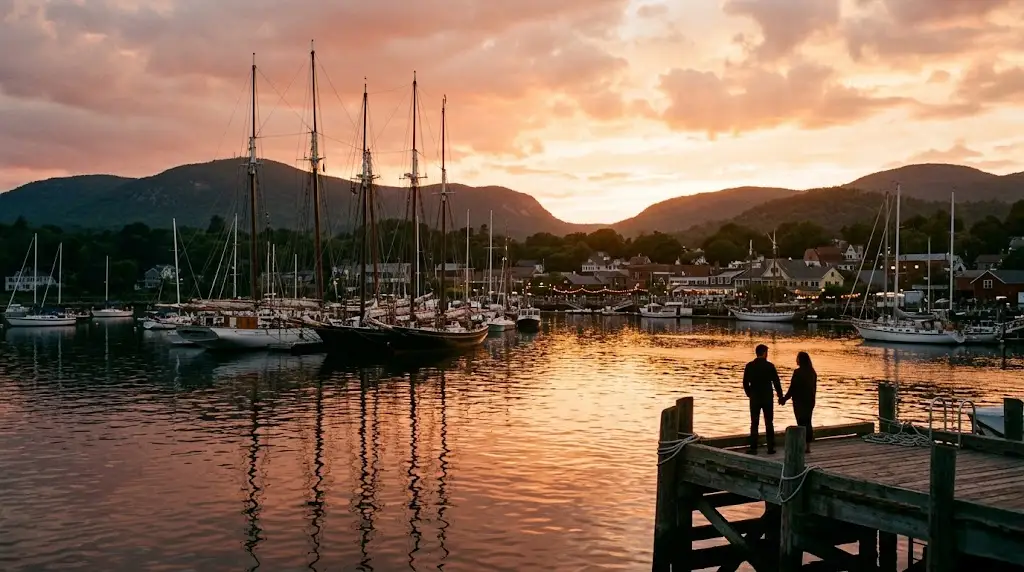
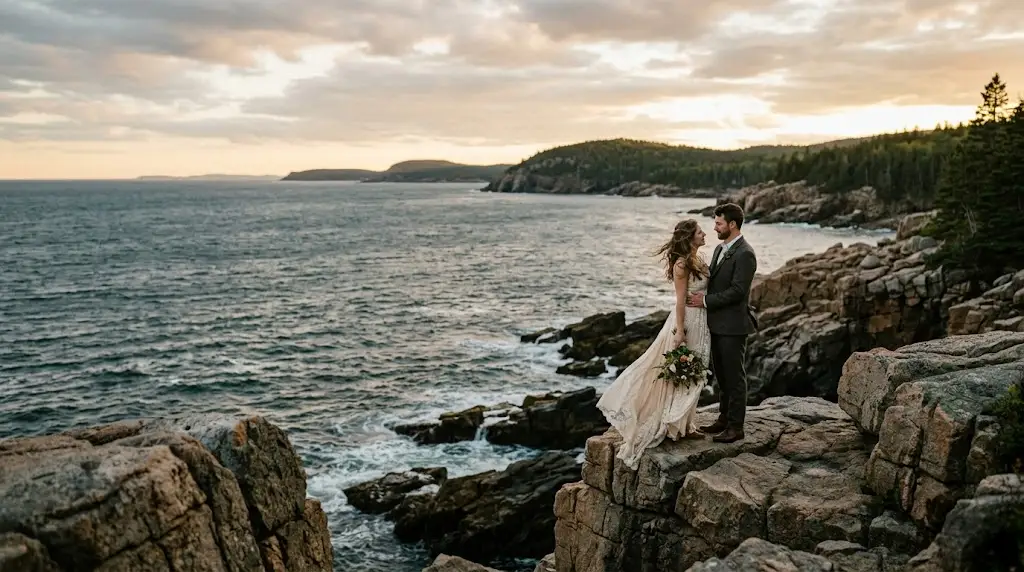
Where you get married shapes your wedding film more than almost any other decision you make. Not just aesthetically — though that’s a big part of it — but technically, emotionally, and in terms of how the day itself unfolds on camera. Outdoor and indoor weddings are genuinely different production environments, and a great videographer approaches them differently.
If you’re still deciding between the two, or you’re locked in on a location and want to understand what it means for your film, here’s an honest look at how Maine’s outdoor and indoor venues each show up on screen — and what to know going in.
The Case for Outdoor: When the Landscape Becomes Part of the Story
Maine is one of the most visually compelling states in the country for outdoor weddings. The coastline, the mountains, the fields, the light — all of it translates to film in a way that’s hard to replicate anywhere else. When you get married outside in Maine, your surroundings aren’t just a backdrop. They become a character in the story.
Golden hour footage shot on a Maine coast or overlooking a lake in the Western foothills has a quality that no studio lighting can imitate. The warmth is organic. The movement — a breeze through tall grass, light shifting across water, a gust that catches a veil — gives the footage life and texture that feels genuinely alive when you watch it back years later.
Outdoor ceremonies also tend to produce stronger audio moments. Vows spoken in open air, without the acoustic complications of a reverberant church or ballroom, often come through with a clarity and intimacy that feels immediate and personal on film.
What changes on the production side: everything depends on natural light, and natural light doesn’t negotiate. A skilled outdoor videographer works around it — timing the ceremony, positioning cameras, reading how the light is moving and adjusting accordingly. When it works, the results are extraordinary. When it doesn’t — when clouds roll in, when ceremony time runs late and you lose the golden hour window — you need a team experienced enough to make the most of whatever they’re given.
Maine weather adds another layer. Even in July, conditions can shift. Wind affects audio. Rain affects equipment and mood. An overcast sky can be beautiful for portraits but challenging for ceremony coverage. None of these are deal-breakers — some of the most cinematic Maine wedding films were shot in imperfect weather — but they require a team that’s genuinely prepared for them rather than hoping for the best.
The Case for Indoor: Control, Atmosphere, and the Challenge of Light
Indoor venues offer something outdoor locations can’t: a controlled environment. When you’re getting married inside a historic Maine inn, a restored mill building, a candlelit ballroom, or a converted barn with Edison lights strung overhead, you have a degree of consistency that outdoor settings never provide. The light doesn’t change because a cloud moved. The audio doesn’t drift because of wind. The visual atmosphere is designed rather than discovered.
And Maine’s indoor venues are genuinely beautiful. A ceremony inside a Kennebunkport inn with late afternoon light streaming through tall windows. A reception in a Portland event space with exposed brick and candlelight. A barn in the Midcoast with high timber ceilings and the smell of pine — these spaces have character and warmth that show up on film in a completely different way than open-air settings.
The challenge for videographers in indoor spaces is almost always light. Candles and Edison bulbs are gorgeous to look at but technically demanding to shoot in. Most historic venues won’t allow supplemental lighting rigs that alter the atmosphere of the space. That means your team needs to be highly skilled at working in low light — with the right equipment, the right camera settings, and the experience to expose correctly without losing the warmth that makes those spaces special in the first place.
Audio in indoor venues can also be complex. Reverberant rooms, high ceilings, and large spaces all create acoustic challenges. Vows that sound intimate and clear at a small outdoor ceremony can get lost in the echo of a large stone chapel. A professional team addresses this with dedicated audio capture — lapel mics, careful placement, and post-production attention to the ceremony sound.
The Barn Wedding: Somewhere Between Both
Maine has no shortage of barn venues, and they deserve their own mention because they create a genuinely hybrid environment. The light behavior inside a barn — that warm, directional shaft of sun cutting through a door or a high window — is one of the most cinematic things a videographer will ever encounter. It’s dramatic in a way that neither a fully outdoor setting nor a traditional ballroom quite matches.
Barn receptions at night, lit by string lights and candles, present the same low-light challenges as any indoor space — but the visual payoff when it’s done well is something couples consistently describe as their favorite footage from the entire day. There’s something about that quality of light, warm and intimate and slightly imperfect, that feels more like a memory than any crisp, evenly-lit footage could.
The transition from outdoor ceremony to indoor reception is also a visual opportunity. The shift in environment, light, and energy tells a natural story of its own — and a thoughtful editor will use that contrast intentionally in the final film.
Mixed Venues: Ceremony Outside, Reception Inside (or Vice Versa)
Most Maine weddings aren’t purely one or the other. A ceremony on a coastal bluff followed by a reception inside a historic inn. Vows in a sun-filled garden and dancing until midnight in a converted mill. Getting ready in a bright, window-lit suite before moving to a candlelit ceremony space. These combinations are common — and for a videographer, they’re genuinely exciting to work with.
The movement between environments gives the film natural structure. It creates visual chapters. The footage breathes differently in each setting, and a thoughtful edit uses those shifts in atmosphere to mirror the emotional arc of the day — the openness and brightness of the ceremony giving way to the warmth and intimacy of the evening.
The key is a team that’s equally capable in both environments rather than one that clearly shines in one and struggles in the other. Ask to see examples of mixed-venue coverage when you’re evaluating videographers, not just their best outdoor or best indoor work.
What This Means When You’re Choosing a Videographer
The location you’ve chosen should be one of the first things you tell a prospective videographer — not just the name, but the specifics. Which direction does the ceremony face? What time of day? Are there lighting restrictions in the venue? Is the ceremony outdoors but the reception inside?
The answers shape everything about how they’ll prepare. A team that has worked your venue before — or one that takes the time to understand it thoroughly before the day — will arrive with a plan rather than a set of guesses. That preparation is the difference between footage that captures the character of a space and footage that merely documents it.
Maine’s venues, whether coastal, wooded, historic, or rustic, all have something worth honoring on film. The right team finds it — in the light, in the architecture, in the landscape, in the specific quality of the place that made you choose it in the first place.
At Willow Grove Films, we’ve filmed in barns and ballrooms, on granite coastlines and under cathedral ceilings, in summer sun and October fog. We know how to read a space and make it work for your film. If you want to talk through your venue and what your day might look like on camera, we’d love to hear about it.